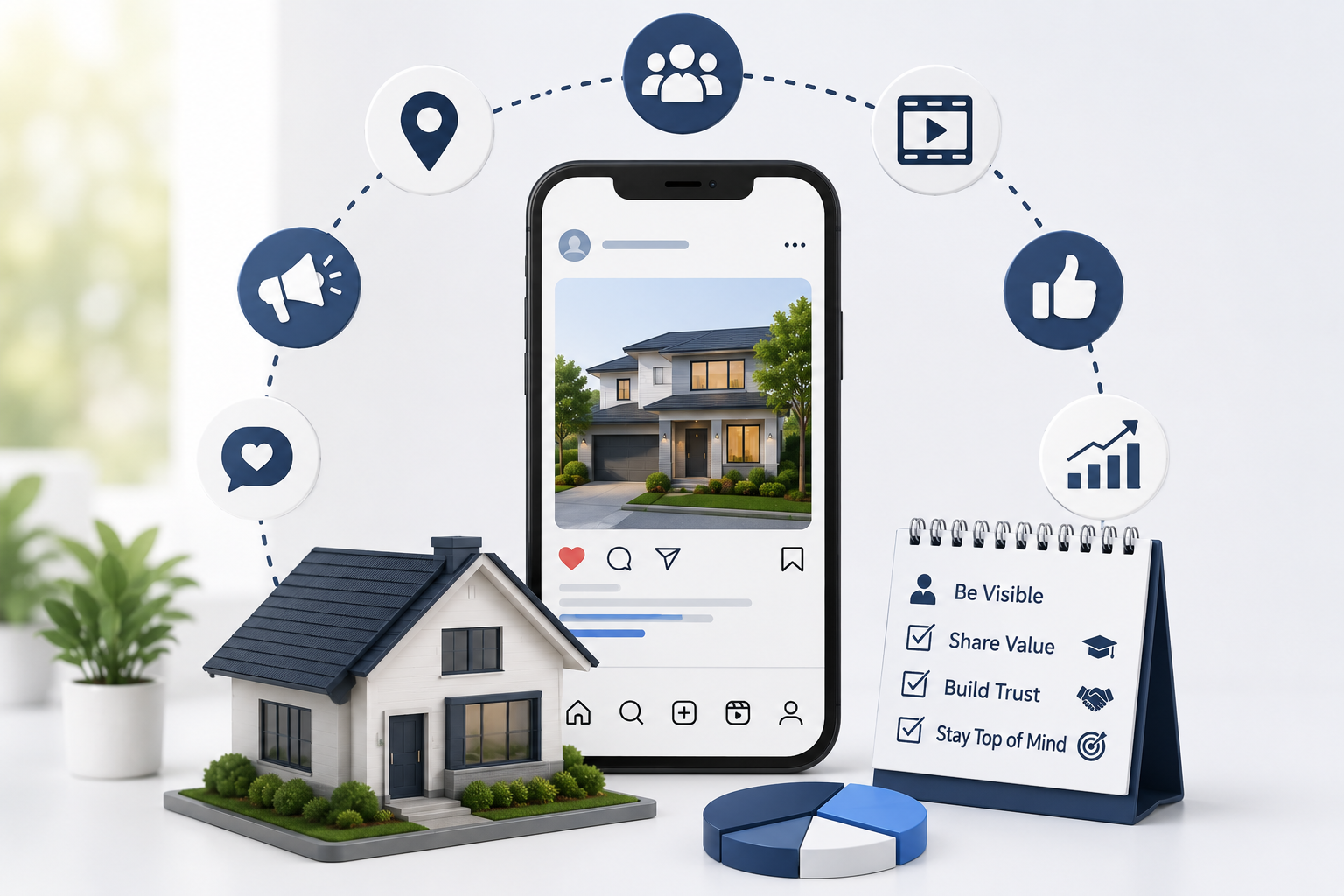
For real estate agents, social media is not simply another place to promote listings. It is one of the most practical ways to remain visible between transactions, build familiarity with local audiences, and give potential buyers and sellers a reason to remember you when they are ready to act.
Many agents treat social media as a sales channel, posting listings, closings, or open houses and then going quiet, which can make their presence feel promotional rather than useful. A stronger approach focuses on consistent, audience-focused content that answers what is useful, interesting, and relevant to potential clients. This is the foundation of effective social media marketing for realtors-not posting constantly, but building a recognizable, useful, and relevant presence that keeps agents top of mind.
Why Consistency Matters More Than Constant Promotion
Consistency does not mean publishing multiple times every day. It means maintaining a predictable presence so your audience continues to encounter your name, expertise, and perspective.
An agent who posts helpful content every week can stay more memorable than an agent who publishes ten promotional posts in one week and disappears for a month.
A consistent social media strategy can help agents:
- Stay visible to past clients and referral sources
- Build familiarity with prospective buyers and sellers
- Demonstrate knowledge of the local market
- Create more opportunities for conversations
- Reinforce their personal brand over time
The key distinction is between consistent communication and constant promotion. Your audience does not need another sales pitch every time they open Instagram or Facebook. They need content that gives them a reason to pay attention.
Promotional content still has a place. Listings, open houses, recent sales, and market updates are important. They simply work better when they are part of a broader content mix.
Build Content Around What Your Audience Cares About
Effective real estate content starts with the audience rather than the platform.
Buyers may want to understand neighborhoods, financing considerations, inspection issues, moving decisions, and the buying process. Sellers may be more interested in pricing, preparation, timing, market conditions, and what actually influences buyer interest.
Local audiences also care about things that extend beyond property transactions.
For example, an agent could create content about:
- Neighborhood changes
- Local events
- New businesses
- Home maintenance
- Property preparation
- Common buyer questions
- Seller mistakes
- Market trends
- Community resources
This approach gives people more reasons to follow an agent even when they are not actively buying or selling.
A useful rule is to create content for the person who may need you six months from now, not only the person who needs an agent today.
Mix Local, Educational, and Personal Content
A strong real estate social media strategy usually combines several types of content rather than relying on one format.
Local Content
Local content helps real estate agents build geographic relevance by highlighting neighborhoods, community events, local businesses, housing trends, parks, schools, and notable changes, helping them become more closely associated with the market they serve.
Educational Content
Educational posts answer questions that buyers and sellers frequently ask.
Examples include:
- What should buyers look for during a home inspection?
- How does a seller determine an asking price?
- What expenses should first-time buyers plan for?
- When does a home need professional staging?
- What happens after an offer is accepted?
Simple explanations can demonstrate expertise without turning every post into a sales pitch.
Personal Content
Real estate is relationship-driven, so personal content helps audiences connect with the person behind the business. Agents can share appropriate behind-the-scenes moments, transaction lessons, community involvement, professional experiences, and what motivates them, without revealing private information, making their online presence more human and relatable.
Turn Everyday Real Estate Work into Content
Agents can create consistent content by turning everyday real estate work into useful posts. A property showing can become a buyer tip, a pricing conversation can explain comparable properties, and a common client question can become a quick FAQ video.
Even routine activities can provide useful content ideas.
For example:
Before a showing: Explain three things you check before bringing a buyer into a property.
During a listing preparation: Share a short checklist of improvements sellers can consider before photographs.
After a closing: Explain one part of the transaction that buyers often misunderstand.
During a neighborhood visit: Highlight something residents or future buyers should know about the area.
This approach makes content creation more sustainable because agents are documenting useful experiences rather than inventing completely new topics every day.
Repurpose Content Across Social Platforms
Creating original content for every social platform can quickly become overwhelming. Instead, agents can build one useful idea and adapt it for different channels.
For example, a detailed post about preparing a home for sale could become:
- A carousel explaining the main preparation steps
- A short video covering the top three priorities
- A Facebook post with additional context
- A story featuring one preparation tip
- A longer website article answering the broader question
Repurposing lets agents keep the same core information while adapting its format for each platform, making consistent posting easier without creating a new idea every time. Content can be shortened, expanded, visualized, or reframed, while a social media marketing agency for realtors can turn one topic into multiple coordinated posts through a structured strategy.
Measure What Actually Keeps You Top of Mind
Follower count can be useful, but it does not tell the entire story.
Agents should pay attention to signals that indicate whether their content is attracting meaningful attention and creating opportunities.
Useful metrics can include:
- Saves on educational posts
- Shares of local content
- Comments and questions
- Direct messages
- Profile visits
- Website visits
- Video watch time
- Engagement from local audiences
- Leads that mention seeing the agent online
Some social media results take time, as someone may follow an agent, engage with their content for months, and reach out when ready to buy or sell. The goal is not just maximizing impressions but building familiarity with the right audience, so consistent visibility among local buyers, sellers, homeowners, and referral sources helps keep the agent top of mind when a real estate need arises.
Frequently Asked Questions
How often should real estate agents post on social media?
There is no universal number that works for every agent. A sustainable schedule is more valuable than posting frequently for a short period and then stopping. Agents should choose a cadence they can maintain while keeping the content useful and relevant.
What should realtors post besides listings?
Agents can publish local updates, educational tips, buyer and seller FAQs, neighborhood information, market explanations, personal insights, behind-the-scenes content, client lessons, and community-related information.
Should real estate agents be on every social media platform?
Not necessarily. It is usually more effective to focus on the platforms where the target audience is active and where the agent can consistently create quality content. Content can then be repurposed when appropriate.
Is personal content important for real estate agents?
Yes. Appropriate personal content can help audiences understand the person behind the business. It can complement educational and local content by making the agent's online presence more recognizable and relatable.
How can agents stay consistent with limited time?
Agents can create content from their existing work, batch similar tasks, maintain a list of frequently asked questions, and repurpose strong topics across multiple platforms. A structured content process can reduce the pressure to create something completely new every day.
Conclusion
Staying top of mind on social media is not about posting constantly but consistently sharing useful, local, educational, personal, and relevant content. Real estate agents can turn everyday client interactions and real estate activities into content, then repurpose it across platforms to stay visible. The goal of social media marketing for realtors is to build familiarity, demonstrate expertise, and earn trust long before the next buyer or seller is ready to act.