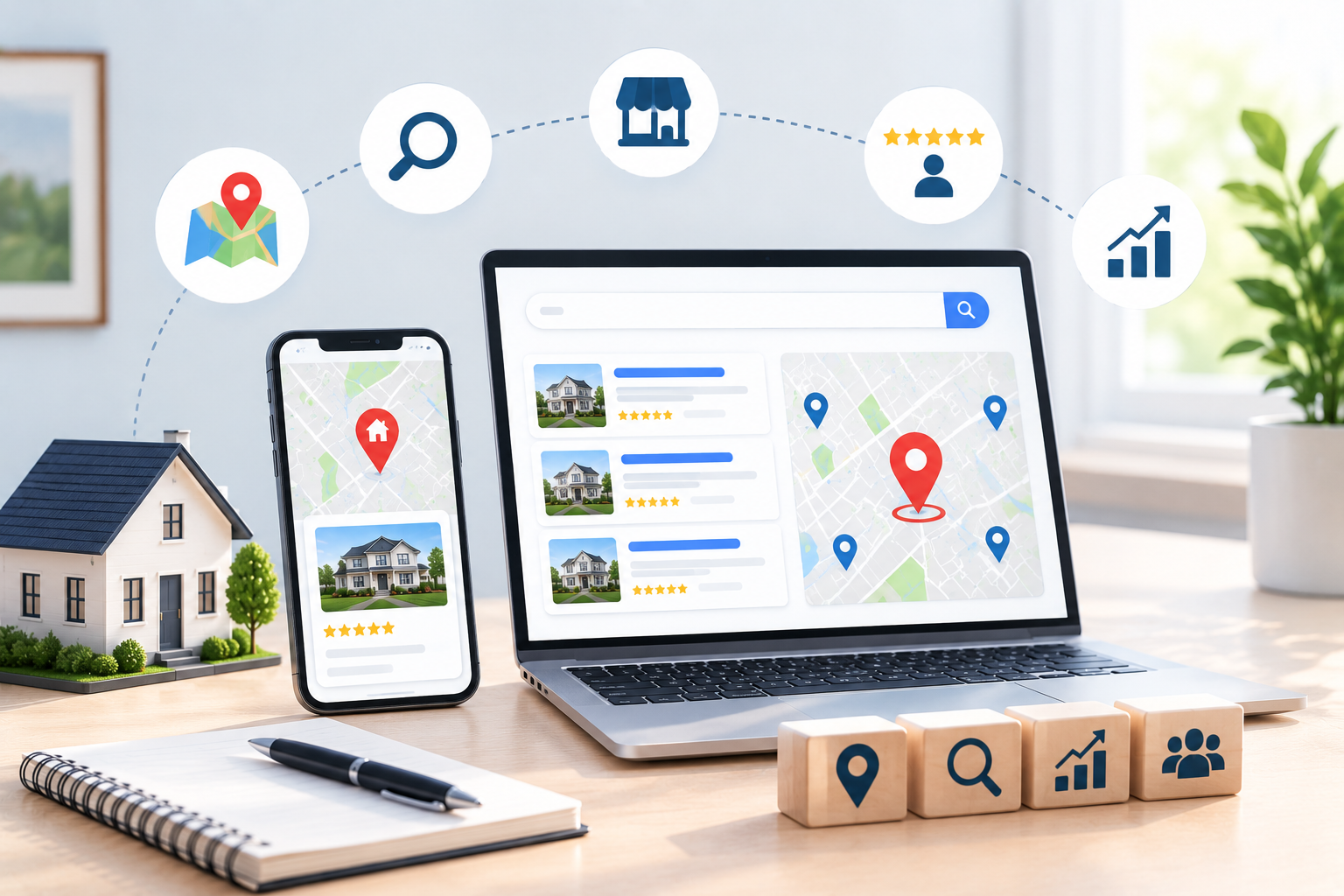
Real estate is one of the most location-dependent industries. Buyers want information about specific markets, sellers want professionals who understand local conditions, and homeowners often look for guidance that applies to their community. Because so much of the real estate decision-making process is connected to location, agents need an online presence that clearly communicates where they work and what they know.
Local SEO gives real estate agents a way to strengthen that connection. It focuses on helping a business become more visible when people search for services, information, and businesses connected to a particular geographic area. For agents, this can support visibility across search engines, maps, business listings, and locally relevant website content.
Local SEO should not be viewed as an isolated marketing activity. It works best as part of a broader digital marketing for realtors strategy where the website, business profile, content, reviews, and external presence all reinforce the same local positioning.
Why Local SEO Matters for Real Estate
Location influences almost every part of a real estate transaction. A property's value depends partly on its market, buyers have different priorities depending on the community they are considering, and sellers want an agent who understands the conditions affecting their particular area.
This creates an important opportunity for agents who build a strong local digital presence.
Search engines need to understand what a business does, where it operates, and how relevant it is to a search, with local results influenced by relevance, distance, and prominence. For real estate professionals, local SEO strengthens these signals by highlighting their market expertise and the communities they serve, helping them reach potential clients earlier in the research process through useful local content. This makes local SEO an important part of digital marketing for realtors, especially for agents seeking long-term visibility beyond paid advertising and third-party property portals.
Find the Local Searches That Matter
A successful local SEO strategy starts with understanding the search behavior of the audience an agent wants to attract.
Agents should focus on local locations, services, property topics, and questions that align with their business and target audience rather than targeting hundreds of keywords. Understanding search intent helps them create content that matches whether people are researching markets, comparing communities, learning about buying or selling, or seeking an agent. Google Search Console, keyword research tools, search results, and questions from client conversations can reveal valuable content opportunities. This focused approach helps agents prioritize relevant topics that match their expertise, services, and target market.
Build Content Around Neighborhood Search Intent
Once an agent understands the local topics their audience cares about, the next step is creating useful content around those topics.
Neighborhood-focused content can be especially valuable because people often want detailed information before making a decision about a community. However, simply creating pages for different locations is not enough. Each page should provide meaningful information that helps visitors understand the area and its real estate considerations.
Useful local content should cover housing characteristics, market conditions, community features, lifestyle factors, and property trends while adding first-hand insights about market changes, buyer preferences, seller considerations, and local property factors. Organizing this information through broader location pages, supporting community and real estate pages, and relevant internal links helps visitors navigate easily while giving search engines clearer context. By focusing on helpful, reliable, people-first information instead of repetitive location-based pages created only for rankings, agents can demonstrate local expertise and gradually build their website into a trusted resource for the market.
Strengthen Your Google Business Profile
A Google Business Profile is another important part of local search visibility for eligible real estate businesses.
Google recommends providing complete and accurate business information because this helps it understand the business and determine when it may be relevant to local searches. Google identifies relevance, distance, and prominence as key factors in local results.
Agents should keep their Google Business Profile accurate and up to date with correct business, website, category, contact, and service information, while earning genuine reviews and responding professionally to build trust. Avoid keyword stuffing or manipulated reviews, and ensure the profile and website provide consistent information. Adding relevant photos and profile details can help potential clients understand the business, making a complete and useful Business Profile an important part of a digital marketing for realtors and local visibility strategy.
Build Local Authority Beyond Your Website
An agent's local authority is not built exclusively through their own website.
Other websites, organizations, publications, and online resources can contribute to how a business is understood and discovered. Google notes that prominence can be influenced by factors such as links from other websites and reviews.
Real estate agents can build local authority by sharing market insights, contributing to local organizations and community resources, and developing genuine relationships with relevant businesses and publications. Consistently providing useful information can increase local visibility through website mentions, social media, email, referrals, and external references, while avoiding low-quality link-building tactics. This genuine expertise and consistent activity can strengthen local SEO while supporting digital marketing for realtors across multiple channels.
Measure Your Local SEO Results
Local SEO needs to be measured regularly to determine whether the strategy is actually improving visibility and generating business opportunities.
Search rankings can provide useful information, but they should not be the only metric an agent monitors. Local SEO performance should be evaluated through a combination of search visibility, website activity, Business Profile interactions, and lead-generation results.
Google Search Console can show which searches generate impressions and clicks. Website analytics can help agents understand how visitors interact with local pages. Business Profile performance data can provide additional information about how people discover and interact with the business.
Important metrics can include:
- Local organic impressions
- Organic clicks
- Search queries
- Traffic to location-focused pages
- Engagement with local content
- Business Profile interactions
- Phone calls
- Contact submissions
- Consultation requests
- Leads generated from local content
Agents should compare local SEO results over time by tracking changes in impressions, traffic, and inquiries to understand whether visibility is improving and contributing to business growth. If a page attracts traffic but generates few inquiries, it may need stronger calls to action, clearer next steps, or better alignment with search intent. Regular measurement also helps identify which topics deserve more investment, while ongoing analysis allows agents to adapt their strategy as search behavior, competitors, local markets, and search engine systems continue to change.
Conclusion
Local SEO helps real estate agents improve visibility by targeting local search intent, creating valuable neighborhood and market content, maintaining an accurate Google Business Profile, building genuine local authority, and measuring results. By focusing on useful, relevant information rather than manipulation, agents can strengthen their website, reviews, social media, and client engagement as part of a complete digital marketing for realtors strategy. Realtor Marketing Labs helps agents connect these marketing efforts into a focused system that makes their business easier to discover and more valuable to potential clients.