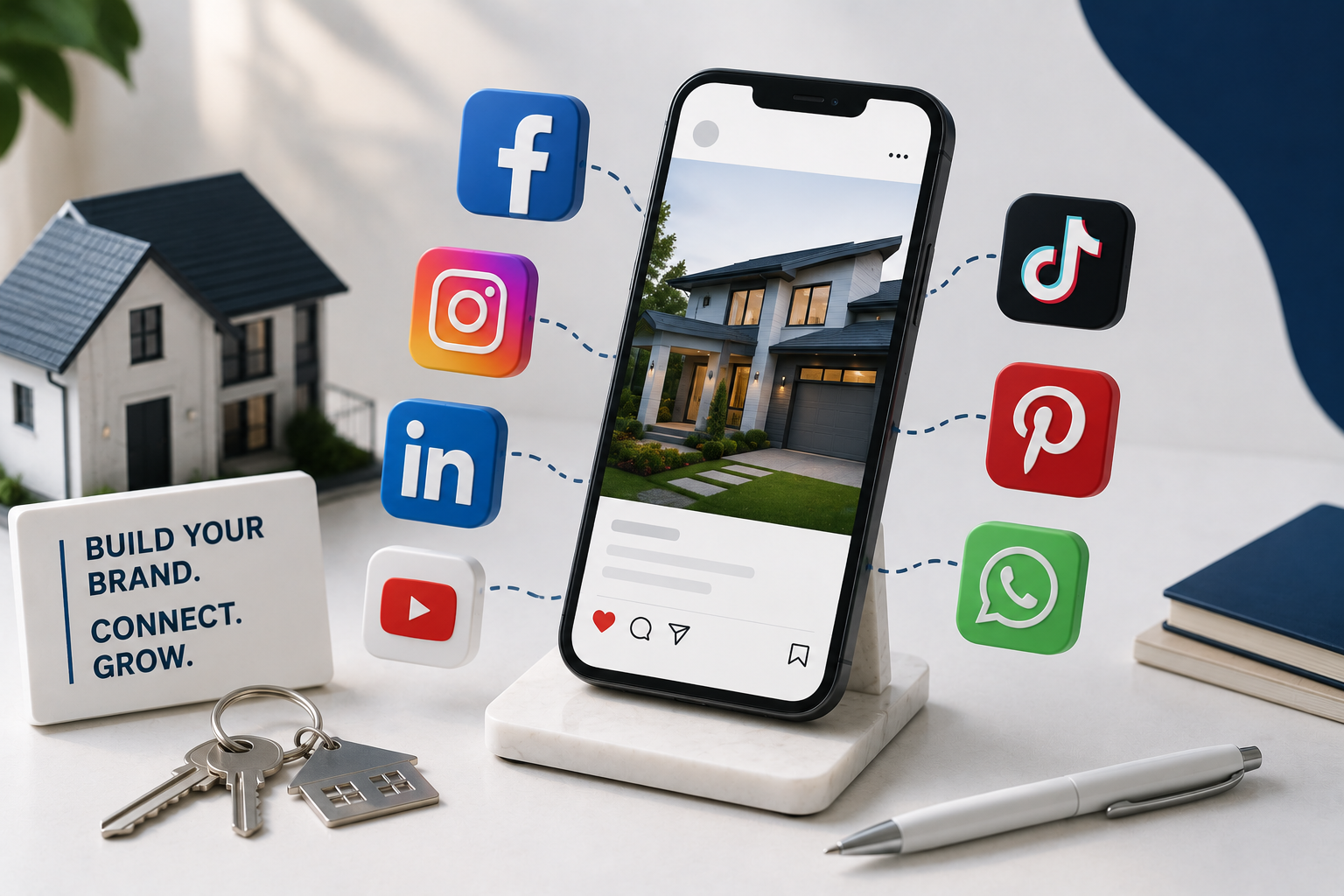
The 7 platforms every realtor should be active on are: Facebook (listings + seller campaigns), Instagram (reels + carousels), LinkedIn (professional authority), Google Business (local search), TikTok (short-form video), YouTube (long-form tours), and X/Twitter (market commentary).
Real estate agents who dominate social media in 2025 are not posting everywhere randomly. They have a clear strategy for each platform, understanding that buyers and sellers use different platforms for different purposes.
Facebook: Your Core Platform
Facebook remains the highest-ROI social platform for most real estate agents. Its targeting capabilities are unmatched — you can reach people who have recently searched for homes, shown interest in moving, or match the demographic profile of your ideal buyer or seller.
What to post: Listing announcements (with photos and virtual tours), Just Sold posts with the agent's story, market update videos, open house announcements, and neighbourhood spotlights.
Frequency: 5–7 times per week, including automated listing posts that publish the moment a new listing goes live in your MLS.
Instagram: Where Buyers Discover You
Instagram is a visual discovery platform — buyers browsing beautiful homes are your core audience. The Reels format consistently outperforms static posts, with real estate Reels regularly achieving 3–5x the reach of photo posts.
What to post: Property walkthrough Reels (15–60 seconds), neighbourhood "day in the life" content, behind-the-scenes of the real estate process, and market update data presented visually.
LinkedIn: Your Professional Authority Channel
LinkedIn is underused by most real estate agents and represents a significant opportunity — particularly for agents who work with corporate relocations, luxury buyers, or investor clients.
What to post: Market insights and analysis, your professional achievements (top producer rankings, certifications), thought leadership on local real estate trends, and team culture posts if you lead a team.
TikTok and YouTube: The Video Opportunity
Short-form video (TikTok, Instagram Reels, YouTube Shorts) is the fastest-growing content format for real estate agents. Videos showing homes, explaining the buying process, or sharing market data routinely reach tens of thousands of people organically — without paying for ads.
YouTube is particularly valuable for long-form neighbourhood guides and home tours, which rank on Google and attract buyers in the research phase of their search.
Google Business Profile: Your Local Search Anchor
Google Business Profile is not social media in the traditional sense — but it is the most important platform for appearing when buyers and sellers search "real estate agent near me" or "realtors in [your city]" on Google.
Post at least 3 times per week. Every post, Q&A response, and review response tells Google that your profile is active and relevant. This directly improves your ranking in local search and Google Maps results.
FAQs
1. Which social media platforms should real estate agents use?
The right platforms depend on the agent's audience and goals. Facebook, Instagram, LinkedIn, TikTok, YouTube, Google Business Profile, and X can each support different activities such as property promotion, professional networking, video content, and local visibility.
2. How often should real estate agents post on social media?
There is no single posting frequency that works for every agent. A consistent schedule is more important than simply posting as often as possible. Agents should choose a sustainable frequency based on their audience, content resources, and performance.
3. Why is video content important for real estate social media marketing?
Video can help agents showcase properties, explain market conditions, answer buyer and seller questions, and demonstrate their personality and expertise. Short-form videos can support discovery, while longer videos can provide more detailed information.