Real estate lead generation strategies are structured methods that help agents attract potential buyers and sellers, capture their contact information, understand their needs, and build relationships that lead to transactions. These strategies combine digital marketing, local networking, targeted outreach, and automated follow-ups to create a consistent pipeline of qualified prospects. A Real Estate Marketing Agency for Agents can help implement these strategies and improve lead generation efforts.
In 2026, generating real estate leads requires more than posting property listings or waiting for referrals. Buyers research neighborhoods and compare properties online, while sellers evaluate property values and agent expertise before making decisions. Agents and team leaders need a repeatable system that combines local SEO, social media, paid advertising, valuable content, referrals, and timely follow-ups to turn inquiries into clients. Tracking performance and refining these channels helps improve lead quality while reducing wasted time and marketing spend.
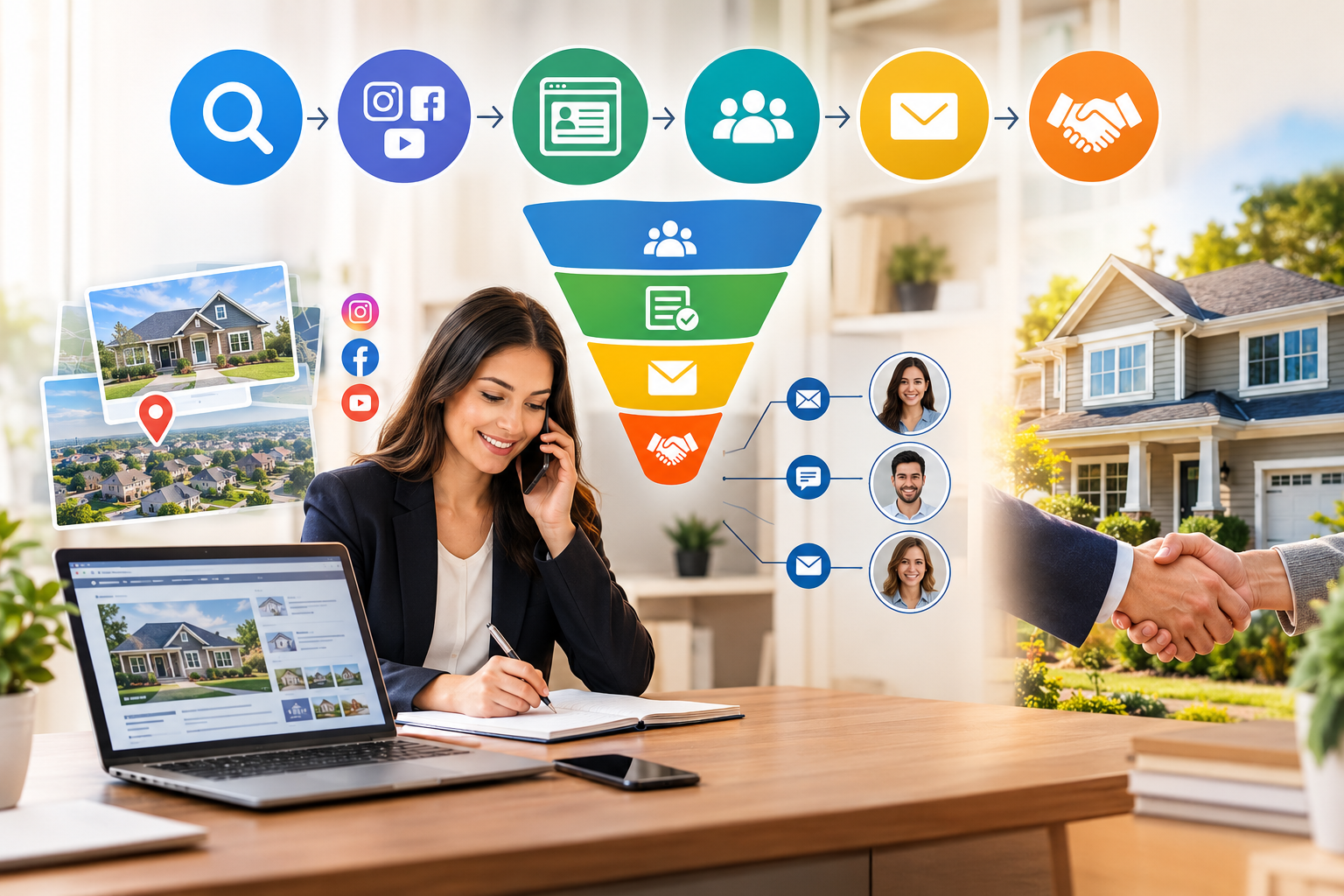
Understand the Five-Stage Real Estate Lead Generation Funnel
An effective lead generation funnel gives every prospect a clear path from discovering an agent to becoming a client. It also helps agents identify where potential business is getting lost.
Stage 1: Attract Prospects Through Search and Social Media
The first step is to make your business visible to potential clients through local SEO and social media. Optimize your website with location-specific service pages, neighborhood guides, market updates, and accurate business profiles to attract relevant local searches. Share property walkthroughs, market insights, home-buying tips, and community updates on social media to showcase your expertise and help prospective clients discover and remember your business.
Stage 2: Capture Leads with Relevant Offers
Website traffic is valuable only when it encourages visitors to take action. Create dedicated landing pages that match each campaign’s intent, offering buyers local property guides and sellers comparative market analyses or home valuations. Keep lead capture forms simple by requesting essential contact details, and clearly explain what visitors will receive and what happens after submission to improve user experience and build trust.
Stage 3: Qualify Leads Before Investing More Time
Not every inquiry has the same level of readiness, so agents should assess each prospect’s timeline, goals, budget, location preferences, and buying or selling stage. Use consistent questions during initial conversations and a CRM to categorize contacts as new inquiries, active prospects, long-term opportunities, or existing clients. Avoid judging lead quality by contact information alone, as prospects who aren't ready to transact today may become valuable clients later.
Stage 4: Nurture Relationships Through Email and SMS
Many prospects need time before choosing an agent, so consistent, relevant follow-ups help build trust and keep your business visible. Use email sequences to share neighborhood guides, buying tips, market trends, pricing advice, property preparation tips, and selling costs. SMS can support timely updates, appointment reminders, and direct communication when prospects have consented. Automation simplifies follow-ups, but personalize messages based on prospects’ needs, respect their communication preferences, and make it easy to connect with a real person.
Stage 5: Convert Qualified Prospects into Clients
Conversion occurs when an agent understands a prospect’s needs and offers a clear next step, such as discovery calls, property tours, and financing discussions for buyers or property valuations, comparable sales reviews, and listing strategies for sellers. Respond promptly, come prepared, and explain how your services meet their needs without making every conversation a sales pitch. After closing a transaction, maintain relationships through helpful homeowner resources, periodic check-ins, and appropriate requests for feedback or referrals to encourage repeat business and new introductions.
Compare Digital and Traditional Lead Generation Channels
A balanced real estate lead generation strategy combines digital channels, such as search engines and social media, with traditional methods, including referrals, networking, and direct conversations. Digital marketing reaches prospects based on their search intent, location, and interests, while relationship-based methods build trust and long-term connections. Neither approach guarantees conversions, as results depend on the market, audience, execution, budget, and follow-up process.
|
Lead generation channel |
Primary advantage |
Main consideration |
|
Local SEO |
Attracts people searching for local real estate information |
Takes consistent effort to build visibility |
|
Google Search Ads |
Reaches prospects searching for specific services |
Requires budget management and conversion tracking |
|
Social media marketing |
Builds familiarity and showcases local expertise |
Results depend on relevance and audience engagement |
|
Email marketing |
Maintains relationships with existing contacts and new leads |
Requires useful content and list management |
|
Past-client referrals |
Builds on established relationships and trust |
Depends on continued relationship management |
|
Community networking |
Creates local connections and professional partnerships |
Takes time and consistent participation |
|
Database reactivation |
Reconnects with previous inquiries and dormant contacts |
Requires accurate records and appropriate outreach |
Prioritize high-intent digital channels like local SEO and Google Search Ads to reach people actively searching for real estate agents, property information, or home valuations. Create relevant landing pages, target the right audience, set a realistic budget, and track lead quality, appointments, and client conversions rather than clicks alone. Alongside digital marketing, build relationships with past clients, local professionals, community organizations, and referral partners such as mortgage professionals, attorneys, and home inspectors. Share useful market updates, participate in community activities, and reconnect with previous contacts through personalized messages to reactivate your database and generate new opportunities.
Outdated vs. Modern Real Estate Lead Generation
Lead generation has changed from relying heavily on broad outreach to using more targeted, measurable, and relationship-focused systems. Traditional methods can still work in the right circumstances, but they benefit from better targeting and follow-up.
|
Outdated approach |
Modern approach |
|
Cold calling purchased lists without clear targeting |
Targeted outreach based on relevant needs and lawful contact practices |
|
Sending the same sales pitch to every prospect |
Offering content and communication suited to each prospect's interests |
|
Collecting leads without a follow-up plan |
Using a CRM to organize contacts and schedule appropriate follow-up |
|
Relying on website traffic alone |
Tracking form submissions, qualified leads, appointments, and conversions |
|
Sending generic mass emails |
Delivering segmented email campaigns with useful information |
|
Measuring success by lead volume |
Evaluating lead quality, acquisition costs, and closed transactions |
|
Treating each transaction as the end of the relationship |
Maintaining past-client relationships and encouraging genuine referrals |
The key distinction is not that every traditional tactic is ineffective. Cold calling, direct mail, and networking may still have a role when they're relevant to the audience and comply with applicable rules.
Modern lead generation improves the process by connecting outreach with useful offers, reliable data, clear next steps, and consistent measurement.
Use Content and Lead Magnets to Earn Attention
Prospective clients often have questions before they're ready to hire an agent, so creating helpful content can build trust and attract potential leads. Share neighborhood comparisons, community guides, home-buying checklists, seller guides, local housing market updates, and property valuation resources to address their needs and demonstrate your expertise.
Turn valuable resources into lead magnets, such as downloadable guides, market reports, and home-selling checklists, to encourage visitors to share their contact details. Ensure each resource provides accurate, reliable information without exaggerated claims. For better search visibility, answer common questions directly, use descriptive headings, include local context, and keep key information accessible to help visitors and AI-powered search systems understand your real estate services.
Build a Follow-Up System with a Real Estate CRM
A lead generation campaign can underperform if agents fail to respond promptly or lose track of prospects. A customer relationship management (CRM) system helps organize contact details, record interactions, assign leads, and schedule follow-ups while giving team leaders a clear view of the sales pipeline. For example, when a prospect requests a property valuation, the CRM records the inquiry, assigns it to an agent, and supports timely contact, follow-up, and consultation scheduling.
Automation helps agents manage leads efficiently and track outcomes to improve future campaigns. However, it should support personal communication rather than replace it. Review workflows regularly, remove irrelevant messages, and ensure all outreach follows applicable privacy, consent, and marketing requirements.
Measure the Metrics That Matter in 2026
Lead volume alone doesn’t show whether your marketing is generating business. Track key metrics such as lead conversion rate, cost per lead, cost per acquisition, appointment rate, lead-to-client conversion rate, and return on marketing investment to understand how effectively your campaigns turn inquiries into clients and revenue.
Use consistent measurement methods across all channels to compare results accurately. Review performance monthly and consider longer sales cycles when needed. If a channel generates many leads but few appointments, evaluate its audience, offer, lead qualification process, and follow-up strategy before increasing your marketing budget.
When to Work with a Real Estate Marketing Partner
Managing SEO, paid advertising, landing pages, email campaigns, analytics, and CRM workflows takes time and coordination. A Real Estate Marketing Agency for Agents can help create a coordinated marketing strategy, improve website conversions, and track results against business goals.
Professional Real estate lead generation services may include local SEO, campaign management, lead capture, nurturing workflows, landing page optimization, and performance reporting. Choose a provider that offers transparent reporting, clear lead ownership, and CRM integration. The right partner should fit your market, budget, and team capacity while supporting your sales process, as agents remain responsible for responding to leads, building relationships, and converting prospects into clients.
Conclusion
The modern real estate lead generation blueprint for 2026 combines local SEO, paid search, social media, valuable content, referrals, and database reactivation into a connected system. By following the five-stage funnel—attract, capture, qualify, nurture, and convert—agents can use a CRM to manage leads, track performance, and identify gaps. Consistent communication, relevant information, and a focus on client needs help build lasting relationships, improve lead quality, and support sustainable business growth.
Frequently Asked Questions
1. What are the most effective real estate lead generation strategies in 2026?
Local SEO, targeted search advertising, useful website content, social media marketing, referral relationships, and consistent lead nurturing are practical options. The right mix depends on the local market and business goals.
2. How can real estate agents generate leads without relying on paid ads?
Agents can invest in local SEO, publish neighborhood guides, build referral relationships, reactivate previous contacts, participate in community events, and maintain an email newsletter.
3. How does a CRM improve real estate lead generation?
A CRM organizes contacts, tracks conversations, schedules follow-ups, and helps agents identify where prospects are in the buying or selling process. It reduces the risk of missed opportunities.